How To Search for Sioux Falls Property Records
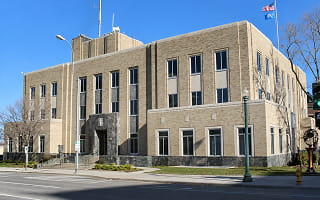
Property records are a goldmine of information that buyers, investors, and real estate professionals can use to conduct due diligence and make informed decisions. These records provide details such as property boundaries, ownership history, assessed values, tax information, liens, amenities, property types, foreclosures, zoning regulations, and more. In Sioux Falls, property records are public, meaning they are generally available to anyone who wants to view them or request copies. However, knowing where to look is crucial, especially since Sioux Falls is spread across two different counties: Minnehaha and Lincoln. Below is a list of key resources you can use to locate different types of Sioux Falls property records.
Sioux Falls City Resources
Because Sioux Falls spans Minnehaha and Lincoln Counties, determining the correct county for a property is the first step when searching for records. The City of Sioux Falls makes this process easier by providing a Parcel Finder GIS tool you can use to search and view detailed address and zoning information. This includes lot lines, ownership details, land use and zoning restrictions, building photos and characteristics, and much more. Searches may be done by address, intersection, name, or parcel ID, and you can also turn layers on and off, reorder maps for customized views, and select features and export data to CSV or other formats.
County Register of Deeds Offices

Sioux Falls is spread across Minnehaha County and Lincoln County, and the Register of Deeds Office in each county maintains official records related to property ownership and transactions in the city. These include plats, deeds, mortgages, covenants and restrictions, easements, satisfactions, and powers of attorney. It is important to note that each office only keeps records for properties located within its county boundaries. You can contact the appropriate register of deeds office to view and search these records. Official online access to records is currently not available, but requests may be submitted directly via email. Here are the contact details for both counties:
-
Minnehaha County Register of Deeds:
415 N. Dakota Ave., 1st Floor
Sioux Falls, SD 57104
Phone: (605) 367-4223
-
Lincoln County Register of Deeds:
104 N Main Street, Suite 130
Canton, SD 57013-1703
Phone: (605) 764-5661
*Note, per South Dakota law, documents recorded after June 30th, 2010, do not typically include personally identifiable information, such as social security numbers and financial account numbers.
County Equalization Offices

The Directors of Equalization in Minnehaha County and Lincoln County are responsible for identifying, listing, and valuing real property in Sioux Falls for tax purposes. Both county equalization offices provide online property search tools that you can use to access ownership details, valuation data, parcel information, building characteristics, and sales history for properties under their jurisdiction. Searches can typically be performed by name, parcel ID, or address (additional options may be available depending on the county). You can also visit the appropriate office to view records or request copies. Here are the contact details the Minnehaha and Lincoln Counties Equalization Offices and links to each office's online search tool:
-
Minnehaha County Equalization Office:
220 W. 6th St.
Sioux Falls, SD 57104
Phone: (605) 367-4228
-
Lincoln County Equalization Office:
104 N Main Street, Suite 210
Canton, SD 57013
Phone: (605) 764-2571
County Treasurer's Offices
Property taxes in Sioux Falls are collected by the Treasurer's Offices in Minnehaha County and Lincoln County, depending on where the property is located. These offices are key resources for tax-related property records, such as current tax statements, payment histories, delinquent accounts, and parcel-specific tax data. Both counties offer online tax search and payment systems that you can use to look up this information (by name, parcel number, bill number, or address), review account details, make payments, and track outstanding balances. You can also contact the appropriate treasurer's office or visit in person for additional information or assistance. Here are the contact details for both county treasurer's offices and links to their online systems:
-
Minnehaha County Treasurer's Office:
415 N. Dakota Ave., 1st Floor
Sioux Falls, SD 57104
Phone: (605) 367-4211
-
Lincoln County Treasurer's Office:
104 N Main Street, Canton, SD 57013-1703.
Phone: (605) 764-5701
South Dakota Unified Judicial System - Second Judicial Circuit

The South Dakota Unified Judicial System's Second Judicial Circuit serves both Minnehaha and Lincoln Counties and is the primary resource for property records tied to legal matters in Sioux Falls, such as foreclosures, liens, title disputes, boundary disputes, and civil judgments affecting property use. The judicial system offers several options for accessing these records online, including an eCourts portal for viewing case information summaries, and a civil judgments database. Note that account registration or subscription fees may be required to utilize some of these tools. Records may also be viewed in person through public access computer terminals available at the county courthouses (copy fees may apply), and you can also contact the relevant county clerk of court for assistance and general inquiries:
-
Minnehaha County Clerk of Court:
425 N. Dakota Avenue
Sioux Falls, SD 57104-2470
Phone: (605) 367-5900
-
Lincoln County Clerk of Court:
104 N Main Street
Canton, SD 57013-1732
Phone: (605) 987-5891
Sioux Falls Property Taxes
Property taxes in Sioux Falls are a crucial source of funding for essential local services, including public schools, law enforcement, fire protection, emergency response services, infrastructure maintenance, and community programs. The Minnehaha and Lincoln County Directors of Equalization are responsible for determining the taxable value of properties in the city, while the respective County Treasurers handle tax billing, collection, and distribution.
Properties are assessed every year based on their market value (excluding agricultural land, which is assessed by productivity). Tax bills are calculated by applying tax levies set by the counties, city, school districts, and other relevant local taxing authorities to each property's assessed value. It is important to note that in Sioux Falls (and the rest of South Dakota), taxes are paid one year in arrears. This means that bills received for a given year reflect the property's value and ownership during the previous year.
Property tax bills are mailed in January. Taxes are technically due in full on January 1st. However, payments may be made in two installments without penalty: the first half must be paid by April 30th and the second half by October 31st. If these deadlines are missed, the respective portion becomes delinquent, and interest begins accruing immediately at a rate of 10% per year. Long-term delinquency can trigger a tax certificate sale process, which may ultimately lead to the property being foreclosed to recover the owed amounts.
Both the Minnehaha and Lincoln County Treasurers provide multiple options for paying Sioux Falls property taxes, including online payments, mail-in payments, and in-person transactions. You may contact the appropriate treasurer's office for additional information or assistance:
- Minnehaha County Treasurer's Office: (605) 367-4211
- Lincoln County Treasurer's Office: (605) 764-5701
![]() Assessments
Assessments

The Minnehaha and Lincoln Counties Equalization Offices conduct annual assessments of properties in Sioux Falls to determine each property's taxable value. Agricultural land is assessed using a "productivity valuation formula," which determines taxes based on the land's ability to produce income and relies on crop and livestock data, with local county adjustments. For other types of real property (owner-occupied, commercial, etc.), assessments are based on the property's "full and true" value as of November 1st each year. These valuations are done using three primary approaches: the cost approach (estimating replacement cost minus depreciation), the market approach (comparing recent sales of similar properties), and the income approach (projecting rental or business income potential to determine value). Once assessments are complete, a state-determined equalization factor (currently 85%) is applied to establish each property's taxable value. Local tax rates set by counties, the city, school districts, and other taxing authorities are then applied to arrive at the final tax bill.
Assessment notices are usually sent out by March 1st each year. Under South Dakota law, if a property's assessed value increases by 20% or more in a single year, the notice must explicitly state this increase along with the previous year's value to ensure the owner is alerted to the sharp rise. If you believe that your property has been incorrectly valued, you may first request an informal review with the appropriate county equalization office. If the matter is not resolved by this, you may file a formal appeal with the Sioux Falls Local Board of Equalization (note: this must be done no later than the second Thursday in March).
If you are unsatisfied with the local board's decision, you can escalate to the Minnehaha or Lincoln County Board of Equalizations (no later than the second Tuesday in April). Further appeals may be made to the South Dakota Office of Hearing Examiners and ultimately to the Second Judicial Circuit Court.
You can reach out to the following offices for additional information or assistance:
- Minnehaha County Equalization Office: (605) 367-4228
- Lincoln County Equalization Office: (605) 764-2571
- Sioux Falls City Clerk's Office: 605-367-8080
![]() Appraisals
Appraisals

Sioux Falls assessments work similarly to appraisals. They both determine the fair value of property by comparing similar properties with others in the local area that have sold recently. In cases of odd structures or new construction, the county may call upon an appraiser to help determine the value. Estate planners, courts, and lenders also use appraisals to value real property.
![]() Tax Rates
Tax Rates

Because Sioux Falls spans two counties, its median effective property tax rate varies depending on the portion of the city the property is located in. For properties in the Minnehaha County part of the city, the effective rate is approximately 1.16%, while for those in Lincoln County, it is slightly higher at 1.19%. Both rates are above the national median of 1.02%. Likewise, the average annual property tax bill in Sioux Falls also depends on the specific location within the city: about $3,767 for properties in Minnehaha County and $4,351 for those in Lincoln County, also higher than the national average of $2,400.
Here's a look at how Sioux Falls' property tax rates compare to other counties in South Dakota:
- Beadle County 0.93%
- Brookings County 1.08%
- Brown County 1.01%
- Codington County 1.06%
- Davison County 0.89%
- Hughes County 0.81%
- Lawrence County 0.85%
- Meade County 0.95%
- Pennington County 1.00%
- Union County 1.11%
- Yankton County 1.04%
![]() Exemptions
Exemptions

Even though property tax rates in Sioux Falls are moderate compared to national averages, some homeowners may still face challenges keeping up with payments. Fortunately, South Dakota offers several property tax relief programs for qualifying residents. These include:
-
Disabled Veterans Exemption: Available to veterans with qualifying service-connected disabilities and exempts the first $200,000 of their home's taxable value. Un-remarried surviving spouses of these veterans may also be eligible.
-
Disabled and Senior Citizens Assessment Freeze: Available to homeowners who are aged 65+ or disabled and prevents their property's taxable value from increasing beyond a specific amount. Un-remarried surviving spouses may also qualify.
-
Sioux Falls Municipal Tax Refund: Automatically applied to residents who qualify for the assessment freeze and refunds up to $500 from the municipal portion of their property taxes.
-
Paraplegic Property Tax Reduction: Available to paraplegics and individuals who have lost use of both lower extremities. This program reduces their property taxes based on income levels. Un-remarried surviving spouses of qualifying residents may also qualify.
You can reach out to the following offices for additional information or assistance with applying for a tax relief program:
- South Dakota Department of Revenue: 1-800-829-9188 (option 2).
- Minnehaha County Equalization Office: (605) 367-4228.
- Minnehaha County Treasurer's Office: (605) 367-4211.
- Lincoln County Equalization Office: (605) 764-2571.
- Lincoln County Treasurer's Office: (605) 764-5701.
Sioux Falls Building Permits/Inspections
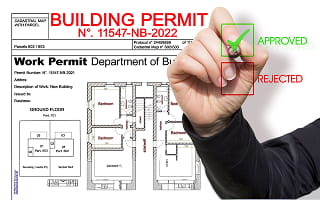
Permits are required for most construction and home improvement projects in Sioux Falls. These permits are issued by the Sioux Falls Planning & Development Services Department and must be obtained before starting work. Exceptions may be made for minor, non-structural projects, provided the work does not affect a building's core systems (electrical, plumbing, and mechanical). Common examples include painting, installing trim and cabinetry, repairing drywall, and replacing faulty fixtures. You can apply for permits, pay fees, track submissions, and schedule inspections online through the city's Customer Self Service Portal (note: account registration is required). In-person services are also available at the department's office, located at City Center building, 231 N. Dakota Ave., Sioux Falls, SD 57104, and you can call (605) 367-8010 for general inquiries and assistance.
Common types of permits issued in Sioux Falls include:
-
Building Permits: For new construction, additions, and major structural changes.
-
Electrical Permits: For installing or modifying wiring, service panels, and electrical systems.
-
Plumbing Permits: For work involving water supply, drainage, and other related plumbing systems.
-
Mechanical Permits: For HVAC systems, furnaces, and other mechanical systems and equipment.
When applying for any of these permits, you must submit the proper documentation (building plans, blueprints, contractor licenses, materials lists, etc.). You must also pay the appropriate fee.
Building inspections are part of the permit process, and they ensure that the work complies with local building and safety codes. You can schedule an inspection through the online portal or in person at the office during regular business hours.
Real Estate in the City of Sioux Falls

Named for both the Sioux tribe and the waterfalls of the Big Sioux River, Sioux Falls is South Dakota's largest city and a vibrant, fast-growing community. Supported by strong healthcare, finance, and manufacturing sectors, Sioux Falls serves as a major economic and cultural hub for the region and is known for its robust job market, affordable cost of living, and high quality of life. The city is home to several professional and semi-professional sports teams and hosts popular annual events, such as the Sioux Empire Fair, SiouxperCon, and Downtown Riverfest, which draw thousands of visitors. Other notable attractions include the Washington Pavilion, the Great Plains Zoo & Delbridge Museum, the USS South Dakota Battleship Memorial, and a replica of Michelangelo's David located in the downtown area.
Sioux Falls, South Dakota, has a population of 192,517 residents, with 97,927 housing units, of which roughly 95% are occupied and 59% are owner-occupied. The city offers a diverse range of housing options, including single-family homes, townhomes, condos, apartments, and new construction developments, with common housing styles like Ranch, Craftsman, Victorian, Colonial Revival, Contemporary, and Traditional. The average home price in Sioux Falls, SD, is $326,187, representing an increase of 1.3% from previous years. Note that actual home values vary significantly depending on the neighborhood. Here are examples of home prices for areas in Sioux Falls:
- Augustana $222,269
- Axtell Park $205,962
- Emerson $193,861
- North End West $205,644
- Pettigrew Heights $205,767
- West Sioux $213,225
The Sioux Falls, South Dakota, real estate market is moderately competitive. Prices are stabilizing, inventory is rising, and affordability is improving. Homes typically go under contract within 50 days of listing, and approximately 13% of properties sell above their listing price.
Searching across multiple government offices and databases to piece together a complete property profile can be time-consuming, but PropertyChecker simplifies the process by pulling key ownership details, tax records, transaction histories, and more into a single, easy-to-use platform. Whether you are buying, investing, or simply doing your due diligence, visit PropertyChecker.com to get the property information you need in minutes.